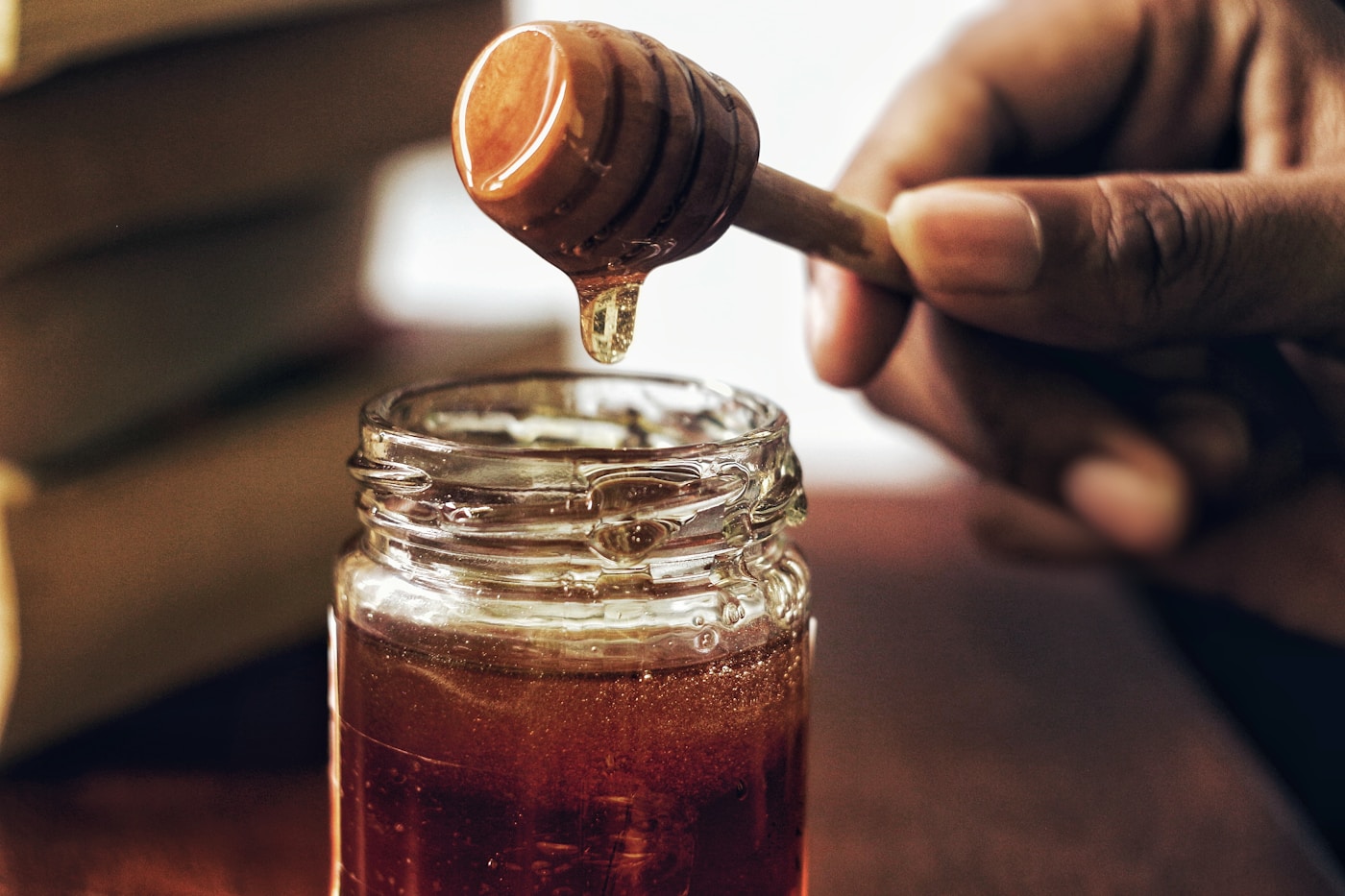
Honey Harvesting & Processing in Australia
From knowing when your honey is ready to harvest through extraction, filtering, bottling and Australian labelling requirements — the complete guide.
When Is Honey Ready to Harvest?
The most common mistake made by beginning beekeepers is harvesting honey too early — before the bees have reduced the moisture content sufficiently for long-term storage. Nectar begins at 60 to 80% water content; the bees process it over several days, fanning to evaporate moisture until it reaches the stable honey moisture level of below 20% (ideally 18 to 19%), then cap the cell with beeswax. Uncapped honey still has elevated moisture content and will ferment in the jar, producing an unpleasant, fizzy, off-flavoured product.
The reliable harvesting standard is: only harvest frames that are at least 80% capped with wax. Frames that are less than 80% capped should be returned to the hive for further processing. If you are unsure whether a partially capped frame is ready, the "shake test" gives a rough guide — hold the frame horizontally and shake it sharply. If nectar sprays out of uncapped cells, the honey is not ready. If nothing moves, the moisture level is likely acceptable. This is not as reliable as the 80% capping visual standard, but it can be used as a supplementary check.
Harvest timing in Australian conditions typically aligns with the end of the main local nectar flow — after the major spring or summer flow has peaked and the colony has filled its supers. In most of eastern Australia, this means harvesting between December and March. Do not leave full supers on the hive indefinitely after the flow ends — a warm autumn hive will consume stored honey rapidly, and a super that was full in February may be significantly lighter by May. Harvest promptly when flows end and the honey is capped.
Extraction Methods
The standard extraction method for Langstroth frames is centrifugal extraction — frames are uncapped, loaded into a hand-cranked or motorised extractor, spun to throw the honey outward by centrifugal force, and the honey runs down the extractor walls to a honey gate at the base. A basic hand extractor handles 2 to 4 frames at a time and is adequate for a small hobby apiary; a motorised radial extractor handles more frames simultaneously and is cost-effective if shared through a beekeeping association.
Uncapping is the process of removing the thin wax capping from each side of the frame before extraction. Tools include: an uncapping knife (heated or unheated), an uncapping fork (a multi-tined fork that scratches through cappings without removing them entirely — slower but wastes less wax), and dedicated uncapping machines for high-volume extraction. Collect cappings in a tray positioned below the uncapping area — beeswax cappings contain residual honey that can be spun out separately, and the clean wax is valuable for candles, cosmetics, and wood polish.
Flow Hive extraction works differently — turning the Flow key opens channels in the modified plastic honeycomb, allowing honey to drain directly from the hive through a tube into a jar or collection vessel without opening the super. This is the convenience advantage of the Flow system. However, Flow frames still require periodic uncapping and wet extraction to maintain the plastic cell structure and remove accumulated wax and propolis from the mechanisms — it is not maintenance-free in the long term.
Crush-and-strain extraction is the low-cost alternative for small operations without an extractor — frames are removed from the hive, the comb is cut from the frame, crushed completely, and strained through a double layer of mesh or cheesecloth. The honey is clean but the comb (and the frames) are destroyed in the process. This method is practical for a beekeeper with only one or two hives producing small quantities, and works particularly well with top-bar hives that do not use reusable frames.
Filtering, Settling and Bottling
Raw honey as it comes from the extractor contains wax particles, propolis fragments, bee body parts, and air bubbles from the extraction process. Filtering and settling remove these before bottling.
Filter through a double layer of stainless steel mesh (400 to 600 micron) or food-grade nylon filter cloth directly into a food-grade settling tank or bucket with a honey gate. This removes gross particles. Fine filtration (below 100 micron) removes pollen, which is how commercial honey is "ultra-filtered" to prevent crystallisation — but for most hobby and small-scale producers, coarse filtering that removes visible particles is sufficient, and leaving pollen in the honey preserves its provenance characteristics and some nutritional properties.
After filtering, allow the honey to settle for 24 to 48 hours. Air bubbles and fine wax particles will rise to the surface, where they can be skimmed off. Settled honey is clear and ready for bottling. Bottle into clean, dry glass jars — moisture contamination from wet jars is a common cause of fermentation. Seal with new lids. Honey does not require refrigeration for storage; properly processed honey with moisture below 20% is shelf-stable for years.
Crystallisation is a natural process — most Australian eucalyptus honeys crystallise within weeks to months of extraction. Crystallisation does not indicate spoilage; it is a sign of natural, properly processed honey. Honey can be reliquified by gentle warming (place the jar in warm water at no more than 40°C — higher temperatures damage flavour and degrade enzymes). For commercial supply, some buyers prefer liquid honey; for direct consumer sale, many buyers appreciate that crystallisation indicates natural product.
Australian Honey Regulations and Labelling
In Australia, honey sold to the public — including at farmers markets, through social media, or to friends and neighbours — must comply with the Food Standards Australia New Zealand (FSANZ) Australia New Zealand Food Standards Code. The relevant standards cover product definition, labelling, and food safety. Understanding the basics protects you from compliance issues even as a small producer.
Under Australian law, a product labelled "honey" must be honey as defined under the Food Standards Code — the natural sweet substance produced by honey bees from nectar or plant secretions. Adding any ingredient (sugar, water, flavouring) to honey creates an adulterated product that cannot be labelled as honey. This sounds obvious but matters in the context of beekeeper feeding practices — syrup fed to bees to build stores should be consumed and converted before honey supers are placed; stores that contain significant proportions of fed syrup rather than nectar-derived honey should not be harvested and sold as honey.
Labelling requirements for honey sold in Australia include: the product name ("Honey" or a specific variety such as "Ironbark Honey"), the country of origin (for Australian-produced honey: "Product of Australia" or equivalent), the net content by weight, the name and address of the producer or distributor, and a best-before or use-by date. For direct farm gate or farmers market sales of small quantities, requirements are somewhat relaxed — check with your state agriculture department for the specific exemption thresholds that apply in your state.
Treatment withholding periods: any hive that has been treated with an approved miticide has a mandatory withholding period before honey in that hive can be legally harvested and sold. Withholding periods vary by product — check the product label and your state's current approved product list. Record all treatments and their dates, and ensure any honey harvested is within the withholding period compliance window.
Australian Honey Varieties and Floral Sources
Australia's unique native flora produces some of the most distinctive honey in the world, and for beekeepers positioned near significant floral resources, mono-floral honey from a specific source can command premium prices in specialty markets. The most significant Australian honey varieties are:
- Ironbark honey (from Eucalyptus sideroxylon and related species): produced from the ironbark eucalypts of inland NSW and Victoria, ironbark honey is characteristically dark amber, rich in flavour, and slow to crystallise. It is one of the most valued Australian monofloral honeys and consistently achieves premium prices at farmers markets and from specialty buyers.
- Yellow box honey (Eucalyptus melliodora): a pale, mild, elegant honey from the yellow box eucalypts of the tablelands and slopes of NSW and ACT. Widely considered one of Australia's finest table honeys — mild enough to appeal to consumers who find darker eucalyptus honeys too strong.
- Leatherwood honey (Eucryphia lucida): produced exclusively in the wilderness forests of western Tasmania, leatherwood honey is uniquely floral and spicy, with a flavour unlike any other honey. It commands the highest prices of any Australian honey variety and is a defining product of Tasmanian agriculture.
- Macadamia honey: produced from macadamia orchards in subtropical Queensland and northern NSW, macadamia honey is pale, mild, and delicate — valuable as a specialty product marketed alongside macadamia nut production.
- Clover honey: produced from white and red clover in irrigated southern Australia, clover honey is mild, light-coloured, and one of the most commercially significant Australian honeys by volume.
To legitimately label honey as a monofloral variety, you need confidence that the bees were foraging primarily on that source during the period the honey was produced. This generally means your hive is within a few kilometres of a significant stand of the relevant plant during its flowering period. Pollen analysis (melissopalynology) can confirm floral sources if you want to market your honey as a specific variety to premium buyers.
Related Guides
Hive Care & Management
Inspections, swarm prevention and the seasonal management calendar.
Bee Health & Disease Management
Varroa, AFB, small hive beetle and registration requirements.
Bee Types in Australia
Compare bee types for honey yield, temperament and varroa resistance.