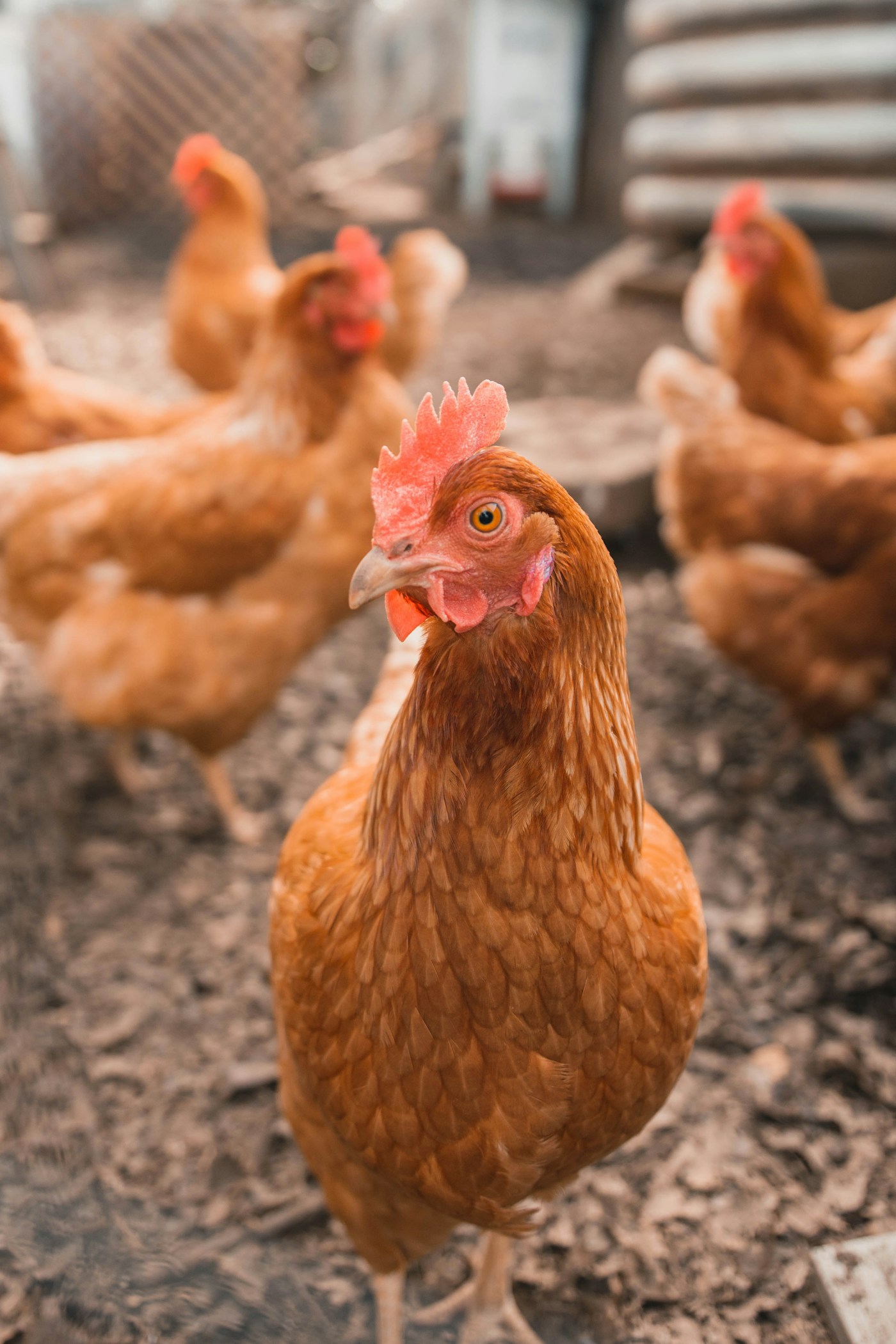
Poultry Care in Australia
Daily routines, seasonal management, moulting, handling and observation — practical care for Australian chicken and duck keepers.
Daily Observation: The Foundation of Good Poultry Management
The single most valuable management tool in any poultry enterprise is the keeper who pays attention. Poultry hide illness instinctively — a bird that shows obvious signs of disease in a flock setting is often significantly sicker than it appears, because the survival instinct of prey animals suppresses the behavioural expression of weakness. Daily observation that gives you a thorough understanding of what normal looks like in your flock is the only reliable way to catch problems early enough to intervene effectively.
The morning round is the most important observation of the day. As you open the coop or let birds into their run, watch the group move. Healthy chickens are alert, quick on their feet, and immediately interested in food. Healthy ducks move with purpose and begin preening and foraging promptly. Any bird that is slow to move, reluctant to leave the coop, standing hunched with feathers fluffed, or carrying a wing lower than normal is displaying illness behaviour and needs to be caught and assessed. Birds that remain on the perch when others have descended, or that move to a corner and stay there while the flock feeds, are of concern and require closer examination.
Physical indicators to check during daily observation: eyes should be bright and clear, not sunken, cloudy, or with discharge. Nostrils should be clean and dry — any nasal discharge warrants immediate investigation in the Australian context given the range of respiratory diseases present in the country. Combs and wattles in chickens should be bright red and well-filled — pale, shrunken, or purple-tinged combs indicate circulatory or health problems. Vent area should be clean and dry — pasting (faecal material stuck to the feathers around the vent) in adult birds indicates diarrhoea and requires investigation. Droppings on the floor of the coop and run should be assessed daily — normal poultry droppings are firm with a white urate cap; loose, watery, blood-tinged, or excessively green droppings indicate digestive or health problems.
Count your flock daily, ideally at the same time — either when birds are entering the coop at dusk or when they emerge in the morning. A missing bird in a poultry flock almost always means a predator event, an escape, or a bird that is down somewhere in the pen. Finding a missing bird promptly — while there is still the possibility of survival or of identifying a predator entry point before another event — depends on a daily count that catches the absence immediately rather than days later when the problem has compounded.
Record keeping for poultry does not need to be complex, but a simple notebook with daily egg production figures, any health events, and monthly observations about flock condition is enormously valuable over time. A consistent decline in egg production over three to four weeks, when correlated with other records, may reveal a clear cause — seasonal change, a new feed batch, a change in water supply, or the beginning of a disease pressure — that would be invisible without the data. Egg production is the most sensitive health and management indicator available in a laying flock, and tracking it daily costs nothing except the habit of writing it down.
Handling Poultry Safely and Calmly
Poultry that are handled regularly from a young age are dramatically easier to work with as adults than birds that only encounter human contact when something goes wrong. This is not merely a welfare observation — it is a practical management reality. A flock that associates human presence with positive experiences (food, calm movement, occasional gentle handling) can be examined, caught, and treated with a fraction of the effort required with flighty, unhandled birds, and the resulting reduction in stress for both birds and handler translates directly to better health outcomes.
The correct way to catch a chicken is to approach slowly, reduce escape options using the fence line or a corner, and scoop the bird up from below rather than grabbing from above. Grasping from above triggers the escape reflex strongly — birds associate aerial threats with predators and will panic violently. Scooping from below with one hand under the breast and the other securing the wings prevents flapping and is far less stressful for both parties. Once caught, hold the bird with its body tucked under your arm, feet controlled in one hand and the other hand free to examine. Never hold a chicken by the legs alone — this is uncomfortable for the bird and risks injury to the hips and legs.
Ducks require a slightly different approach. They are faster on the ground than most people expect and can injure themselves and others in confined spaces when panicked. Approach calmly and slowly, and where possible work them into a smaller pen before attempting individual capture. Once caught, hold a duck with both wings secured against the body — duck wings are powerful and can deliver painful blows if allowed to flap freely. Support the bird's weight from below and keep the head calm; ducks are easier to examine and less stressed when held horizontally rather than vertically.
Children and poultry can coexist well, but adult supervision is essential for young children interacting with any poultry. Roosters — particularly in the spring breeding season — can be aggressive toward unfamiliar people and toward children, who are closer to the bird's eye level and whose quick movements trigger defensive responses. An aggressive rooster that has struck a child should be removed from the flock — the behaviour rarely improves once established. Ducks, particularly females during breeding season, can also display defensive behaviour, though injury risk is lower than from a spur-equipped rooster.
Seasonal Management Through the Australian Year
Australian poultry management must adapt to a seasonal cycle that varies more dramatically than many other countries — from winter conditions in southern Australia that can drop below zero, to summer conditions across most of the continent that push well above 35°C for extended periods. The challenges and management priorities shift markedly through the year.
Summer is the highest-risk period for poultry welfare across most of Australia. Heat stress in chickens becomes significant above 30°C and life-threatening above 40°C, with laying hens in peak production particularly vulnerable because their metabolic rate is elevated by laying activity. Signs of heat stress: rapid open-mouth breathing (panting), wings held away from the body to increase surface area, pale combs, reduced or no movement, and in severe cases, collapse. Management priorities in summer: shade that provides genuine relief (not just filtered sunlight but complete overhead cover in the hottest afternoon hours), fresh cold water refreshed multiple times daily (birds will significantly reduce intake from warm water, accelerating dehydration in the animals already most at risk), and feed delivery shifted to early morning and late evening when temperatures are lower to encourage intake during cooler periods. Ice in the water, frozen fruit as treats, and wetting the ground under shade structures are all effective mitigation strategies. Ventilation in poultry housing is critical — still, hot air in a closed coop is far more dangerous than the temperature alone suggests. Ensure cross-ventilation that provides genuine air movement, not just openings that allow air temperature to equilibrate.
Autumn is typically the easiest management period — temperatures are moderate, production is recovering from any summer slump, and disease pressure from many summer pathogens is reducing. This is the ideal time to catch up on health management tasks: full coop cleanout and disinfection, assessment of the flock for any birds that have been struggling through summer and identifying those unlikely to be productive through winter, and ensuring the housing is adequately weatherproofed before cold weather arrives.
Winter in southern Australia introduces cold management challenges that poultry keepers in warmer regions do not face. Chickens are reasonably cold-tolerant when dry — a well-feathered adult chicken can handle cool temperatures with good shelter — but wet, cold, drafty conditions cause rapid health deterioration. The focus in winter management is: dry housing with no cold drafts (drafts are more harmful than low temperature), adequate night-time roosting space so birds can huddle for warmth (chickens roost communally for this reason and need adequate perch space to do so), and maintenance of production through shortened day length. Artificial lighting to extend the effective day to 14 to 16 hours stimulates laying through winter months in southern Australia, where natural day length is insufficient to maintain production. A simple timer and warm-spectrum LED globe in the coop achieving a gradual dawn effect provides the photoperiod stimulus needed to sustain laying without disrupting natural rhythms. Ducks are significantly more cold and wet tolerant than chickens and rarely require the same winter housing attention in temperate Australian conditions.
Spring brings renewed reproductive activity — increased egg production in layers, brooding behaviour in breeds with strong instincts, and the beginning of the tick, mite, and lice season that peaks in warm weather. Spring is the time to assess housing for any damage from winter, begin the biosecurity measures appropriate for the upcoming high-risk parasite period, and manage broody hens appropriately — removing them from nest boxes regularly if they are not being used for hatching, or providing them with fertile eggs if a new generation is planned.
Moulting: Management Through the Annual Feather Cycle
Moulting — the annual replacement of the feather coat — is one of the most misunderstood processes in backyard and small farm poultry management, and mishandling it causes both welfare problems and unnecessary production disruption. Every chicken undergoes an annual moult, typically triggered by shortening day length in late summer and autumn (though stress, illness, and nutritional deficiency can trigger partial moults at other times). During moult, the bird channels its protein resources into feather production rather than egg production, and laying drops dramatically or ceases entirely for four to twelve weeks depending on the individual bird and the quality of nutrition provided.
A moulting bird looks alarming to a keeper unfamiliar with the process. Feathers fall out in large quantities, often starting at the head and neck and progressing down the body and wings. Pin feathers (new feathers still in their blood-filled sheaths) emerge, giving the bird a spiky, bristled appearance and making the skin sensitive and tender — moulting birds actively avoid being touched or handled and are more withdrawn and reactive than usual. This sensitivity is genuine; the blood supply in the pin feather sheath means that broken pin feathers are painful and can bleed significantly. Minimise handling of moulting birds and observe without capturing unless there is a specific health concern.
Nutritional support during moult is critical to both welfare and the speed and quality of feather regrowth. Feathers are approximately 85% protein, and the nutritional demand of growing a full new set of feathers is substantial. Increase the protein content of the diet during moult — if birds are on a standard layer pellet (16% crude protein), switch to a grower pellet or add a protein supplement such as black soldier fly larvae, mealworms, or cooked egg to the diet. Birds that moult on inadequate protein produce lower-quality regrowth and take longer to complete the moult. Adequate clean water is especially important during moult as feather synthesis has significant water requirements.
Commercial producers often induce moult deliberately — through controlled feed or water restriction, or through manipulation of day length — to synchronise the flock's production cycle and manage the timing of high-productivity periods relative to seasonal market demand. This practice is regulated and in some cases restricted in Australian jurisdictions. Small farm and backyard producers typically manage moult by accepting the natural timing, providing adequate nutrition during the process, and planning their production expectations around the annual cycle rather than trying to override it.
Predator Management in the Australian Context
Australia's predator landscape for poultry is more demanding than most of the world. The combination of introduced predators — the red fox (arguably the most significant threat to poultry across most of Australia), the feral cat, the black rat, and in some areas the black snake — with native species that are fully protected under law — wedge-tailed eagles, goannas, quolls in some regions, pythons in the north — creates a management challenge where some predation threats can be actively controlled and others must be managed purely through exclusion and housing design.
The red fox is the primary poultry predator across most of mainland Australia. Foxes are intelligent, persistent, and remarkably capable of finding entry points into poultry housing that the keeper did not know existed. They dig under fences, push through inadequately secured doors, pull mesh panels away from frames, and will return repeatedly to a location where they have previously found food. A fox that has accessed your poultry once will return. Design poultry housing with the assumption that a fox will invest significant time and effort in finding a way in: bury wire mesh a minimum of 300 to 400 millimetres below the surface around the perimeter of any pen that relies on wire sides for predator exclusion (foxes dig reliably at the base of a fence), use heavy gauge welded mesh (not lightweight chicken wire, which a determined fox will push or pull through) of at least 75mm hexagonal opening, and ensure all door hardware is of a quality that cannot be opened by an animal with moderate physical force and persistence.
Rats and mice are significant and underestimated poultry threats, particularly in urban and peri-urban settings. They attack chicks and young birds directly, steal feed (which also introduces biosecurity risks through their droppings contaminating feed and water), and harbour diseases transmissible to both poultry and humans. Rat-proof feed storage in sealed metal containers is the most effective control measure — eliminating the food source reduces rat pressure more effectively than any reactive control program. Hardware cloth (welded wire mesh with 12mm openings) over all ventilation points and around the base of coops prevents entry. Rodent baiting programs should use products safe for use around poultry and placed in stations that prevent poultry access to bait.
Wedge-tailed eagles and other raptors present a management challenge that cannot be addressed by lethal control — all Australian raptors are fully protected species, and interfering with them in any way is a serious offence. The practical management response is overhead exclusion netting or fully covered runs for free-range birds in areas with significant raptor pressure. Guardian animals — livestock guardian dogs, alpacas, and geese (which are alert, vocal, and genuinely effective at deterring aerial and ground threats in small-scale settings) — are commonly used to reduce raptor predation without the need for covered housing in lower-pressure situations.
Goannas (large monitor lizards) are significant egg and chick predators in warm and tropical areas of Australia, and like raptors they are fully protected and cannot be killed or interfered with. Physical exclusion — hardware cloth under nest boxes, secure nest box closures during the day when birds are not sitting — is the only practical management response. Goannas are excellent climbers and will access elevated nest boxes if the structure permits; smooth metal predator collars around coop legs in high-pressure areas can reduce access.
Flock Integration and Social Management
Poultry are intensely social animals with clear hierarchies — the "pecking order" is a real and important social structure that determines access to food, water, roosting space, and nesting sites within a flock. Understanding and managing the pecking order is essential for flock welfare, particularly when introducing new birds to an established group or managing a flock with significant size or age variation between individuals.
Introducing new birds to an established flock is one of the most reliably stressful events in poultry management, and it should never be done without a transition protocol. A direct introduction — opening the gate and releasing new birds into the existing flock — almost always results in significant aggression from the established birds, who perceive the newcomers as intruders. Serious injuries from pecking and chasing can result, particularly to younger, smaller, or more docile birds. The standard approach is a physical separation period — keeping new birds in a pen adjacent to the existing flock where they can see and smell each other without physical contact for one to two weeks. After this familiarisation period, integration is done by releasing the flocks together at a time when attention can be given to monitoring for two to three hours — best done when the whole flock is moved into a new or unfamiliar space simultaneously, as the disruption of novelty reduces the established birds' home advantage and moderates the aggression of integration somewhat.
Pecking and feather-pulling in an established flock beyond normal social assertion indicate problems that need to be addressed. Causes include: overcrowding (the most common single cause — birds under spatial stress intensify social aggression significantly); nutritional deficiency, particularly protein (boredom-driven feather pecking is often partially a protein-seeking behaviour); insufficient environmental enrichment; parasites causing skin irritation that birds then focus on and exacerbate; and the presence of blood on a bird (chickens are attracted to the colour red and will peck at a wound relentlessly — any bleeding bird must be removed from the flock immediately and treated before reintroduction). Anti-peck sprays, beak trimming (now restricted in many Australian jurisdictions without veterinary supervision), and environmental enrichment — perches at different heights, dust bath access, foraging substrate — all reduce pecking behaviour when the underlying cause is overcrowding or boredom.
Coop Hygiene and Disease Prevention
The single greatest predictor of disease incidence in a poultry flock is housing hygiene. Bacteria, viruses, parasites, and fungi that cause poultry disease all accumulate in litter, on surfaces, and in the environment of a poorly cleaned coop at rates that quickly overwhelm the immune defences of even well-vaccinated, well-nourished birds. Conversely, a clean, well-ventilated coop housing appropriately stocked birds on clean, dry litter creates an environment where disease pressure is consistently low and birds can express their production potential without the immune cost of continuous pathogen exposure.
Litter management is the core of coop hygiene. The deep litter system — where litter is built up over a season, turning regularly to maintain aerobic fermentation and prevent anaerobic wet spots — works well in dry Australian conditions and low to moderate stocking densities. The litter generates some warmth from composting, reduces ammonia when managed correctly, and requires less frequent complete cleanout than a replacement system. The failure mode of deep litter is wet spots — areas where water spillage, high local bird density, or poor ventilation allow anaerobic conditions to develop, creating ammonia buildup and a breeding ground for coccidia and other pathogens. Check litter moisture regularly; it should be loose and friable, not caked. Add fresh dry litter material (straw, wood shavings, sugar cane mulch) over wet areas rather than allowing them to compound.
Complete cleanout and disinfection of the coop at minimum twice per year — more frequently at higher stocking densities — is essential for long-term flock health. The procedure: remove all litter and organic material, scrub all surfaces with hot water and a stiff brush, allow to dry completely (disinfectants are dramatically less effective on wet or organically contaminated surfaces), apply a registered poultry disinfectant at the manufacturer's recommended dilution to all surfaces, allow to dry completely again, and introduce fresh litter before restocking. Pay particular attention to nest boxes, perches, and the underside of feeders — these are the highest-traffic, highest-contamination sites in any coop.
Red mite (Dermanyssus gallinae) deserves specific attention in the context of coop hygiene. This tiny external parasite is invisible to the casual observer, hides in the cracks and crevices of coop structures during the day, and emerges at night to feed on birds — causing anaemia, reduced production, feather damage, and in severe infestations, death in young or weak animals. The initial detection method is inspecting the coop at night with a torch and looking for moving rust-coloured specks on white surfaces. During a full cleanout, check under perch brackets, in cracks in wooden structures, and in nest box corners — red mite infestations in established coops can be severe. Treat the coop structure with a licensed acaricide, paying specific attention to harbourage sites. Red mite is temperature-dependent in its lifecycle and is most active and damaging in warm Australian summers — heighten vigilance from October through March.
Recommended Poultry Equipment
Equipment mentioned in this guide. Affiliate links — we may earn a small commission at no extra cost to you.
Related Guides
Feeding Chickens & Ducks
Layer pellets, scratch, grit, oyster shell and water management.
Poultry Health
Marek's disease, coccidiosis, mites, lice and biosecurity for Australian keepers.
Chicken Coop & Housing
Coop sizing, ventilation and predator-proofing against foxes and raptors.