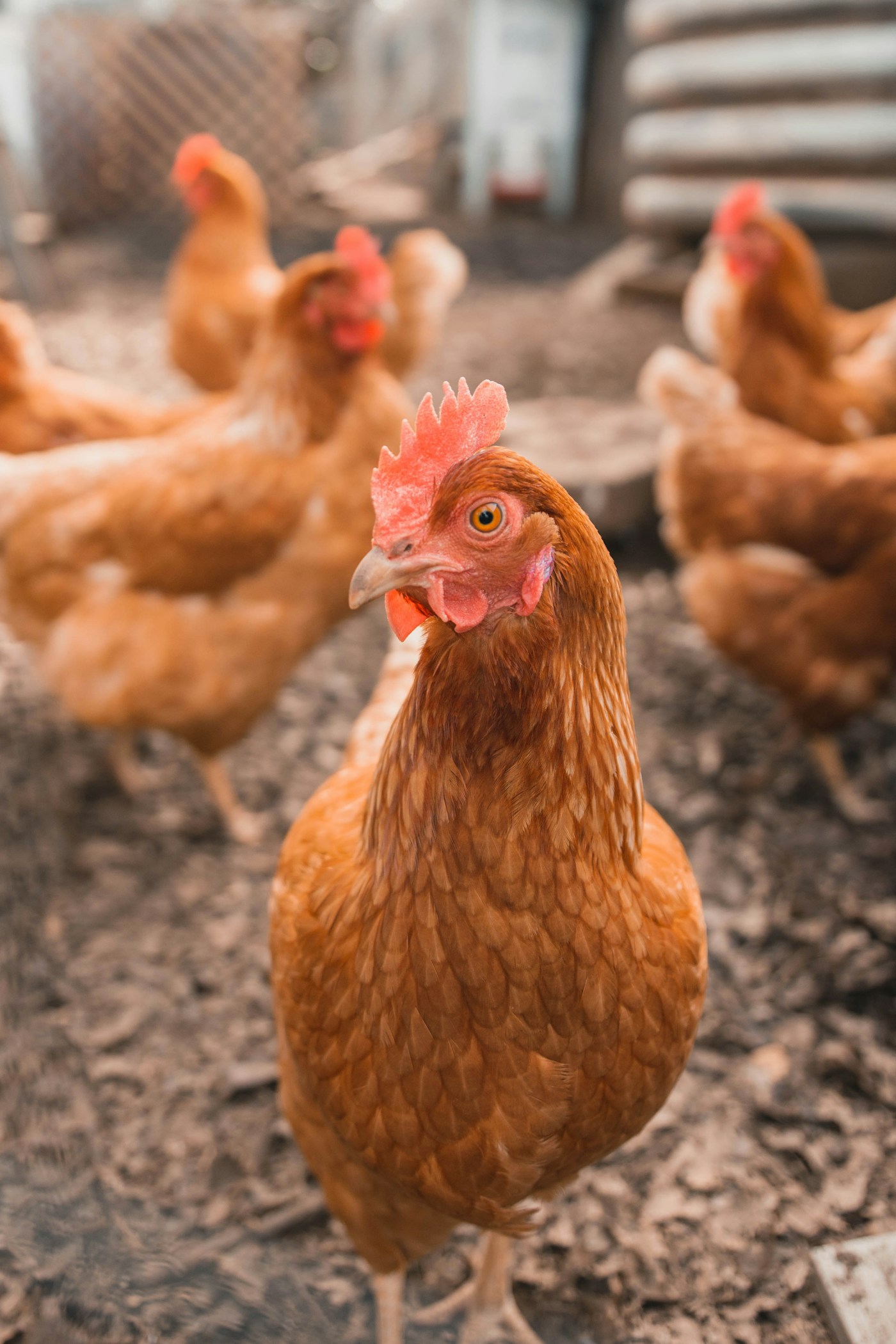
Poultry Housing for Australian Conditions
Coop design, ventilation, nesting, perches, predator proofing and duck shelter — practical housing for Australian chicken and duck keepers.
Housing Principles for Australian Conditions
Poultry housing in Australia must address a wider range of environmental challenges than in many parts of the world — the combination of extreme summer heat in inland and northern regions, cold wet winters in southern areas, the specific predator pressure of the Australian landscape, and the biosecurity obligations that come with keeping birds in a country that maintains active surveillance for exotic poultry diseases. Good housing design addresses all of these requirements simultaneously, and the most common failures occur when any one of them is treated as a secondary concern.
The hierarchy of priorities in Australian poultry housing design is: predator exclusion first, ventilation and temperature management second, dry litter management third, and operational convenience fourth. This order matters because each level supports the one above it — a coop that is well ventilated but predator-accessible is not a functional coop; a coop that is predator-proof and well ventilated but always damp is a disease factory. Operational convenience — how easy it is to clean, collect eggs, refill feeders — is genuinely important for sustainable management but should never override the first three.
Size is the variable most frequently underestimated at the design stage. The standard rule of thumb for housing chickens in a combined coop-and-run system is 0.3 to 0.5 square metres of floor space per bird inside the coop and at least 1 square metre per bird in the run. These are minimums — comfortable, well-socialised chickens in a low-stress environment are more productive and healthier than the same birds in the minimum-specification housing. Overcrowding is the single most reliable predictor of behavioural problems (feather pecking, vent pecking, aggression), disease incidence, and reduced production. When in doubt, build larger than you think you need — adding additional birds to fill the space is always easier than expanding housing after the birds are in.
Material selection for Australian poultry housing involves tradeoffs between cost, durability, and thermal performance. Corrugated steel roofing in light colours (cream, pale grey, or white) reflects solar radiation and dramatically reduces thermal gain inside the coop compared to dark-coloured or uninsulated roofing. In climates with hot summers, the colour and insulation status of the roof is the most important thermal design decision available. Treated pine framing with wire sides provides good ventilation but minimal thermal mass — these structures heat rapidly in the morning and cool rapidly at night, which is generally appropriate for Australian conditions. Brick or concrete block construction provides thermal mass that moderates temperature extremes — cooler by mid-morning than a metal-clad structure — but at a significantly higher construction cost.
Ventilation: The Most Important Design Element
If you could only optimise one element of a poultry coop for Australian conditions, it would be ventilation. Inadequate ventilation causes more disease, more heat stress deaths, and more production loss than almost any other single design failure — yet it is the element most frequently compromised when cost or simplicity are prioritised over function.
The reason ventilation matters so much is twofold. First, poultry produce enormous quantities of moisture through respiration and via their droppings — in a well-stocked coop without adequate air exchange, humidity rises rapidly to levels that support the growth of respiratory pathogens, allow litter to become wet and ammonia-generating, and compound the thermal stress of hot days by combining heat with humidity in a way that is far more physiologically damaging than dry heat at the same temperature. Second, ammonia from moist litter is a primary cause of respiratory disease in poultry — ammonia concentrations above 25 parts per million cause measurable respiratory mucosa damage that opens the airway to secondary bacterial and viral infection; concentrations above 50 ppm cause obvious eye and respiratory irritation and are acutely welfare-compromising.
Adequate ventilation design requires: openings at the highest point of the coop structure for hot, moist air to exit (ridge vents, high gable vents, or a raised roof profile that creates a continuous ventilation gap between the roof and the wall tops); inlet openings at lower levels to allow fresh air entry without creating cold floor-level drafts in winter; and sufficient total opening area to provide multiple complete air changes per hour in a fully stocked coop. A practical minimum is that the total ventilation opening area should equal at least one-fifth of the floor area of the coop. In the Australian summer, this minimum is often inadequate — err toward larger, adjustable openings that can be partially closed in cold weather but fully open in summer.
Adjustable ventilation — openings that can be widened in summer and restricted (but never fully closed) in winter — is significantly better than fixed ventilation in climates with large seasonal temperature variation. External louvres, hinged panels, or sliding covers over ventilation openings allow the operator to adapt the airflow to conditions rather than compromising between summer and winter in a fixed design. In practice, many small-scale coops in southern Australia benefit from fully open sides with hardware cloth predator protection in summer, with the option to temporarily close panels or hang shade cloth or hessian over openings in the coldest winter conditions.
In tropical and subtropical Australia, shade takes priority over enclosed housing for much of the year. Open-sided, fully shaded structures — a roof with shade cloth or corrugated iron over a wire-sided frame — provide adequate shelter and protection while maximising airflow. Enclosed coops in tropical conditions trap heat and humidity to dangerous levels and should be replaced or significantly modified where they exist. Even at night in tropical Queensland summers, air temperature and humidity are sufficiently high that ventilation is required rather than containment.
Predator-Proofing: Building Against the Australian Threat Profile
Australian poultry housing must be designed against a predator threat profile that includes both introduced and native species, some of which can be controlled and some of which are fully protected. Understanding the specific capabilities of the predators in your area allows you to design housing that excludes them effectively rather than guessing at what is sufficient.
The red fox is the most significant predator threat across most of mainland Australia outside the tropics. Foxes are capable of: digging under fences and coop foundations; pushing through or pulling apart inadequately secured wire mesh; opening poorly latched doors and gates by persistent manipulation; climbing wire mesh where the top is not secured; and accessing any gap wider than approximately 80 to 100mm. Fox-proof coop construction requires: heavy gauge welded wire mesh (13 or 16 gauge, 25mm or 50mm opening) rather than lightweight chicken wire; a buried wire apron extending 300 to 400mm outward from the base of all wire sides, stapled or pegged flat to prevent digging; door hardware of a quality and configuration that cannot be opened by persistent manipulation — sliding bolts with padlocks or screwed-shut fixings are more secure than simple hook-and-eye latches; and a solid roof over the pen or wire mesh fully enclosed overhead in open-topped runs.
Quolls — spotted native carnivores of the family Dasyuridae — are fully protected and a significant poultry predator in areas of Tasmania, northern Queensland, and some mainland ranges where they remain. They are excellent climbers, can squeeze through gaps as small as 50mm, and will enter coops both at night and during daylight. Fully enclosed housing with no gaps above 30mm is the only effective exclusion measure. Quoll populations are locally significant and their distribution should be checked through your state wildlife authority if you are establishing a poultry enterprise in native vegetation areas.
Raptors — wedge-tailed eagles, brown falcons, black-shouldered kites, and various hawk species — are fully protected and a significant daytime threat to free-ranging poultry across most of Australia. Complete overhead exclusion with netting or wire covering the entire free-range area is the only definitive protection. Where complete overhead coverage is not practical, the alternatives are: guardian animals (livestock guardian dogs, geese that alarm loudly at aerial threats, or alpacas in larger areas); providing dense vegetation or other overhead cover within the ranging area where birds can take shelter when alarmed; and timing ranging access to periods of lower raptor activity (midday is generally the lowest-activity period for most raptors). The presence of a rooster significantly improves flock safety from aerial predators, as roosters are vigilant alarm callers that alert the flock to threats.
Snakes — particularly carpet pythons in tropical and subtropical areas, and red-bellied black snakes in southeastern Australia — are egg and chick predators that are fully protected native species. The practical exclusion measure is nest boxes with openings no larger than necessary for a hen to enter — a circular opening of 25 to 28 centimetres diameter is adequate for most breeds while being too small for a large carpet python to navigate. Regular collection of eggs (twice daily) removes the attractant before snakes have time to locate and access them.
Nesting, Roosting and Internal Design
The interior design of a chicken coop determines how comfortably and productively the birds use the space. Getting the nesting, roosting, and feeding infrastructure right from the beginning costs little more than getting it wrong and has a significant ongoing impact on egg quality, flock health, and management effort.
Nest boxes are where eggs are laid, and their design directly affects egg cleanliness, breakage rate, and the incidence of egg eating — one of the most frustrating behavioural problems in laying flocks and one that is significantly more common in poorly designed nest box situations than in well-designed ones. Standard specifications: one nest box per four to five hens (providing more than this does not improve egg hygiene and encourages some hens to use boxes for sleeping, which contaminates the nesting area with night droppings); interior dimensions of approximately 30cm wide by 30cm deep by 30cm high for standard breeds, larger for heavy breeds; a sill or lip of 50 to 80mm at the front to retain nesting material and prevent eggs rolling out; a slightly darkened interior (hens prefer to lay in dark, private locations — a partial cover or hood over the nest box opening reduces light and reduces the incidence of competition for popular boxes); and nesting material that is clean, dry, and changed regularly — straw, wood shavings, or commercial nesting pads all work well. Position nest boxes at a lower level than the main roosting perches — hens preferentially roost at the highest available point, and if the nest box is the highest point in the coop, hens will attempt to roost in it, contaminating the egg-laying area with droppings.
Roosting perches are critical to both welfare and coop hygiene. Chickens must have adequate, comfortable perch space to roost at night — crowding on perches or absence of perch space causes birds to roost on the floor, increasing contact with droppings and dramatically increasing coccidiosis and respiratory disease risk. Perch space: minimum 20 to 25cm per bird for light breeds; 30cm per bird for heavy breeds. Perch diameter: 32 to 50mm — a perch that allows the bird's toes to close approximately two-thirds around it provides the best grip and foot health. Flat perches with slightly rounded upper edges are preferable to round dowel-type perches, which do not allow adequate toe positioning and can cause bumblefoot over time. Position perches at consistent heights where all birds can access them without competition — multiple heights create a dominance contest for the highest positions and may leave subordinate birds without access to a perch.
The droppings board or dropping pit under the perch area is the highest-contamination zone in the coop and deserves specific design attention. A removable board positioned 200 to 300mm below the perches, extending the full length and width of the roosting area, captures the significant proportion of the flock's daily output that is produced during the overnight roosting period. Removing and cleaning this board every two to three days — significantly more frequently than a full litter cleanout — removes the highest-pathogen litter material efficiently and dramatically extends the interval between full cleanouts needed to maintain acceptable hygiene. A hinged, removable droppings board is one of the most underutilised productivity improvements in small-scale coop design.
Housing for Ducks: Different Needs, Different Design
Ducks require housing that differs from chicken coops in several important ways, and attempting to use chicken-specific designs for ducks creates management problems that a purpose-appropriate duck shelter would avoid. Understanding the specific needs of waterfowl — their absence of roosting behaviour, their greater cold and wet tolerance, their specific water management requirements, and their laying behaviour — allows housing design that works with their nature rather than against it.
Ducks do not roost — they sleep on the floor. This means that the roosting perch infrastructure that defines chicken coop interior design is entirely absent from duck housing. The entire floor area is the resting space, and floor area allocation is therefore more important in duck housing than in equivalent chicken coops: a minimum of 0.5 square metres per duck inside the shelter, with 2 square metres per duck in the day pen or ranging area. Because ducks rest on the floor, litter management is more intensive than in a chicken coop with raised roosting perches — ducks produce a wetter dropping than chickens (waterfowl digestive systems have a higher water content in their output) and they continuously track water from their drinking source into the housing, creating wet litter conditions that require more frequent attention than equivalent chicken housing.
Water management around duck housing is the most labour-intensive aspect of duck keeping, and designing to minimise this labour cost at the housing design stage pays ongoing dividends. Position the water source at the furthest practical point from the shelter entrance and nest areas — ducks will inevitably make a mess around the water and you want this mess as far from the dry sleeping area as possible. Hard surfacing (concrete, compacted gravel, or rubber mats) around the water station creates a manageable, cleanable zone that prevents the water area from becoming a permanent bog. Slope the hard surface away from the shelter, and direct water runoff to a drainage point that keeps it away from both the shelter and any garden or pasture areas. Elevated or nipple drinkers that ducks can submerge their bills in but cannot sit in dramatically reduce the water spillage around the housing compared to open bowls or troughs.
Duck nest boxes differ from chicken nest boxes in position — ducks nest on the ground, not in elevated boxes. Provide ground-level nest areas within the shelter in a corner or along the wall, separated slightly from the main sleeping area by a low partition or bedding barrier. The nest area should be darker than the main shelter, lined with straw or similar nesting material, and large enough for the duck to turn around comfortably. Ducks are generally less particular about laying location than chickens and may lay in the main sleeping area or even outdoors if nest provision is inadequate — outdoor eggs are at greater risk of contamination and predation, so providing an attractive indoor nest area and encouraging its use reduces this problem. Muscovy ducks specifically will seek elevated nesting sites if available — provide a low platform (30 to 50cm high) with adequate nesting material in the shelter if keeping Muscovies.
Predator exclusion for duck housing follows the same basic principles as chicken housing but with one important difference: ducks are more valuable as live predator deterrents than chickens, as geese and ducks alarm loudly to the presence of predators and will alert other animals and the keeper to threats. This does not reduce the need for secure housing — ducks are as vulnerable to foxes, quolls, and raptors as chickens and must be locked in at night — but it does mean that a small number of ducks added to a mixed small farm flock provides a genuine security function in addition to their production value. Lock ducks in at dusk and release them after sunrise — foxes hunt most actively in the two hours either side of darkness, and ducks on a free-range system that are not secured at these times will eventually suffer predation regardless of how well protected the daytime ranging area appears.
Housing for Meat Birds and Small-Scale Broiler Production
Meat bird housing in a small-scale Australian context is typically a tractor or portable shelter system rather than a permanent structure. The meat chicken tractor — a lightweight, bottomless, portable cage that is moved daily across pasture — provides fresh ground, pasture access, and manure distribution simultaneously, and is the basis of the pastured poultry production model that has grown substantially in Australia over the past decade as consumer demand for genuine free-range or pastured chicken products has increased.
The design of a functional meat bird tractor balances shelter (a roofed area covering approximately one-third of the tractor floor for shade, weather protection, and a dry area for feed and water), access to pasture (the remaining two-thirds of the floor area being open or mesh-bottomed, allowing birds to access the ground underneath), and ease of movement (handles, wheels, or skids that allow a single person to drag the tractor forward by one body length each morning without undue physical effort). Standard sizing is 2.4 by 2.4 metres for 25 to 35 birds in a six to eight week growing period — larger is better for bird welfare and pasture impact management, smaller creates litter management problems within the tractor itself.
Permanent broiler housing on a small scale — shed-based systems for growers producing 200 to 500 birds per batch — requires the same ventilation, litter management, and biosecurity principles that apply to all poultry housing but with the specific addition of thermal management for young chicks in their first week. Day-old chicks are unable to thermoregulate — they are entirely dependent on ambient temperature or supplementary heating to maintain body temperature in the normal range (35 to 36°C in the brooding zone for day-old chicks, reducing by approximately 3°C per week until brooding heat is withdrawn at three to four weeks of age). Radiant heat lamps, gas brooders, or electric panel heaters positioned to create a warm zone while leaving cooler areas where chicks can self-select temperature are the standard small-scale brooding solutions. Monitor chick behaviour rather than thermostat temperature — chicks that are crowded tightly under the heat source are cold; chicks spread evenly through the brooding area or actively moving to cooler zones are at the right temperature; chicks crowded away from the heat source are too warm.
Related Guides
Poultry Care
Daily routines, predator management and seasonal flock management.
Chicken Breeds in Australia
Best laying and dual-purpose breeds for Australian backyard flocks.
Farm Fencing in Australia
Predator-proof fencing options for poultry and mixed livestock properties.