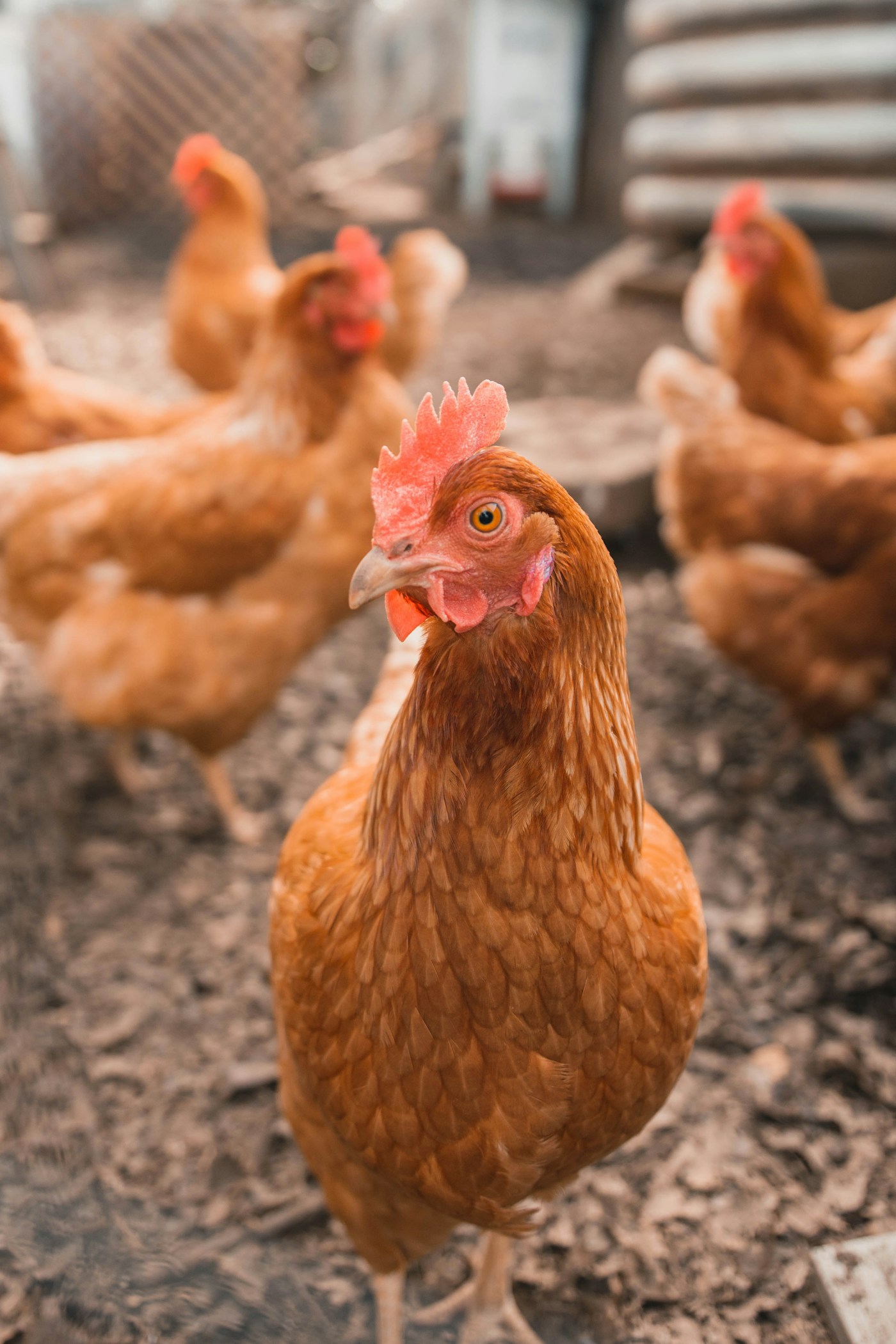
Australorp
The Australian national breed — a world record holder for egg production and a calm, cold-hardy hen that is as at home in a small farm flock as it is in a show pen.
About the Australorp
The Australorp is one of the genuinely great achievements of Australian agricultural breeding — a breed developed entirely in this country from British Black Orpington stock in the early twentieth century, and the holder of a world egg production record that still stands as one of the most impressive demonstrations of heritage-breed productive capacity ever achieved. In 1922, six Australorp hens set a world record of 1,857 eggs over 365 days — an average of 309.5 eggs per hen per year — a performance that shocked the international poultry world and established the Australorp's reputation as a genuinely commercial heritage breed, not merely a beautiful show bird.
The Australorp was developed from the Black Orpington primarily through the hands of Australian poultry enthusiasts who recognised that the British breed had significant untapped laying potential buried under the show fancy's preference for type over production. Australian breeders, unconstrained by the British show standards, selected relentlessly for laying rate across multiple generations and in doing so created a bird that surpassed its ancestor in production while retaining the calm, heavy, well-feathered characteristics of the Orpington. The result — the Australian Black Orpington, later shortened to Australorp — was officially recognised as a distinct breed by the early 1930s and has since been exported back to many countries from which its ancestor came.
For the small Australian farm, the Australorp offers a combination of virtues that no imported breed quite matches in the local context. Production of 250 to 300 eggs per year in a well-bred laying strain is genuinely competitive with commercial hybrids in the first season, with the significant advantage that the Australorp maintains respectable production over three to four years rather than declining sharply after 18 months. The breed is hardy in Australian conditions — it was developed here and selected against local climate and disease challenges — and is specifically well-adapted to the cool, wet winters of southeastern Australia where its heavy feathering provides excellent insulation. It is also one of the most manageable and docile breeds available, with a reliable temperament that has made it the recommended first breed for new keepers across multiple generations of Australian poultry guides.
Show-quality Australorps and production-strain Australorps are substantially different animals in practice. Show strains have been selected for type — particularly the characteristic tight, beetle-green sheen of the black plumage and the upright carriage — but production has sometimes been secondary. Production strains maintained by dedicated laying breeders produce significantly more eggs than show strains but may not have the showroom perfection of type birds. For a farm or backyard flock, a production-strain Australorp from a reputable breeder is the appropriate choice; for someone who wants to show birds as well as keep productive layers, a dual-registered stud is worth seeking out.
Characteristics
Production
Production of 250 to 300 eggs per year in laying strains, sustained over multiple seasons — three to four productive years rather than the 18 months typical of commercial hybrids. Eggs are brown, large, and consistent. The Australorp's production advantage over commercial hybrids is longevity, not peak rate — the annual production differential of 20 to 50 eggs per year is more than compensated by the sustained production across additional seasons. Roosters are table-worthy at 3.5 to 4.5 kilograms with 55 to 60% dressing percentage — a genuine dual-purpose asset in a farm setting where surplus roosters provide a return.
Feeding & Care
Australorps are low-maintenance and undemanding. Standard layer ration, shade in summer, dry shelter in winter. The breed's heavy feathering means it tolerates cold well but can overheat in extreme summer conditions without adequate shade and water access — provide deep shade and refresh water frequently in January and February in mainland Australia. Some lines retain a degree of brooding instinct — a broody Australorp is an excellent sitter and attentive mother, which is either an asset (if you want to hatch chicks naturally) or a management inconvenience (if you want consistent egg production and need to break broody hens regularly).
Pros & Cons
✅ Pros
- Australia's own heritage breed — developed for local conditions
- Sustained production over 3 to 4 years vs 18 months for hybrids
- Outstanding temperament — ideal for families and beginners
- Genuinely dual-purpose — roosters provide table meat
- Heavy feathering — excellent cold tolerance
- Can reproduce naturally — not dependent on commercial hatcheries
⚠️ Cons
- Lower peak production than ISA Brown (250–300 vs 300–320)
- Show vs production strain variation — source carefully
- Some lines carry brooding tendency — may disrupt production
- Heavier frame requires more feed than smaller hybrid breeds