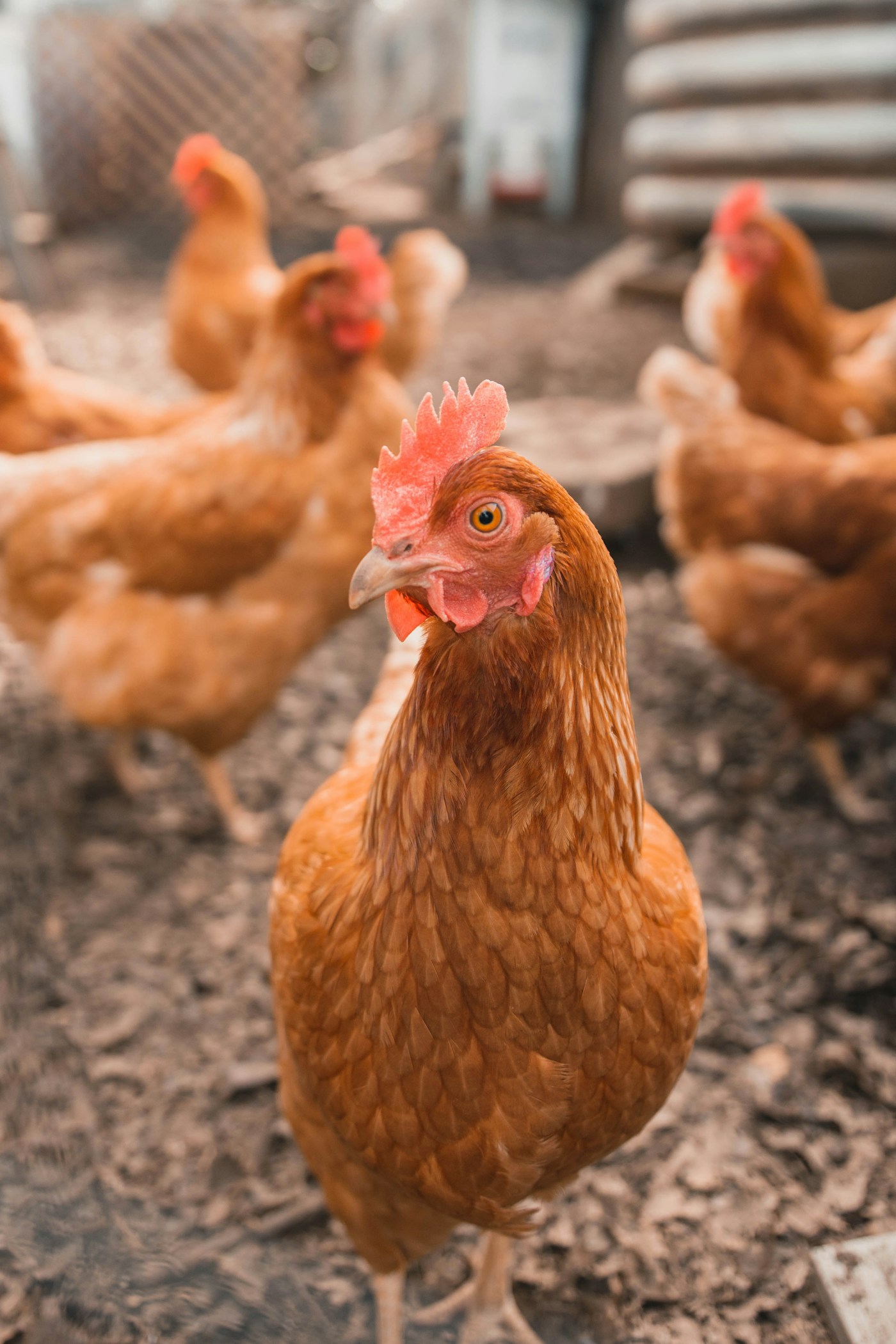
ISA Brown
Australia's most popular backyard hen — a commercial hybrid laying 300 to 320 eggs per year with a calm temperament suited to beginners.
About the ISA Brown
The ISA Brown is the most widely kept laying hen in Australia — a commercial hybrid rather than a true breed, developed through intensive genetic selection for maximum egg production efficiency. The name derives from the Institut de Sélection Animale (ISA), the French company that developed the strain in the 1970s as part of the global commercial egg industry's push for ever-higher production from smaller, more feed-efficient birds. The ISA Brown and its close commercial equivalent the Hyline Brown account for the majority of laying hens in both commercial Australian cage and barn operations, and the same genetics drive the point-of-lay hens sold through rural suppliers and produce stores across the country.
The ISA Brown's dominance in the Australian backyard market is earned primarily by production performance. A young ISA Brown hen at point of lay (18 to 20 weeks) begins laying almost immediately and can sustain rates of 300 to 320 eggs per year in her first laying season — a rate that significantly exceeds most heritage breeds and requires no special management to achieve. The eggs are large to extra large, brown-shelled, and consistent in quality. For a new keeper whose primary goal is egg production from a manageable, low-drama flock, the ISA Brown delivers reliably and without the setbacks that more variable heritage breeds can present in their first season.
The temperament of commercial hybrids like the ISA Brown is generally calm, curious, and amenable to handling — a product of decades of selection that included docility as a commercial trait (aggressive hens in a large barn flock create management problems). ISA Browns are sociable within the flock, tend to establish stable pecking orders without excessive aggression when managed at appropriate densities, and are among the friendliest breeds for children and new keepers. They adapt readily to confinement or ranging conditions and are not prone to the flighty, skittish behaviour that some Mediterranean breeds display.
The primary limitation of commercial hybrids in the small farm context is production lifespan. ISA Browns are bred to lay intensively for approximately 72 to 80 weeks of production — about 18 months after first egg — and their laying rate declines significantly after this period. Most commercial operations cull at this point; backyard keepers who intend to keep hens as long-term pets rather than commercial producers should be aware that production will drop substantially after the first two years and that a hen purchased as a backyard producer has a different productive lifespan than a heritage breed selected for longevity. ISA Browns are also not a self-sustaining breed — they do not breed true (the cross that produces them must be remade each generation by the parent company), and they have limited brooding instinct, meaning flock replacement requires purchasing new point-of-lay birds rather than hatching your own replacements.
Characteristics
Production
Production peaks at 300 to 320 eggs per year in the first laying season, declining to 200 to 250 in the second year and 120 to 180 in subsequent years. Eggs are consistently large to extra large with good shell quality throughout the first production year. Feed conversion is among the best of any laying breed — approximately 120 to 130 grams of layer pellets per hen per day at full production. No significant seasonal production variation in warm-climate Australia, though production drops with shortening day length in southern states without supplementary lighting.
Feeding & Care
ISA Browns require standard layer management with no breed-specific complications. Provide layer pellets ad libitum, fresh water always available, oyster shell separately. The breed is prone to reproductive tract problems — internal laying, egg peritonitis, and ovarian cancer — at a higher rate than many heritage breeds, likely because the reproductive system is under constant high-rate production pressure. Any hen that suddenly goes off food, appears lethargic, or has an obviously swollen abdomen should be seen by a vet. Check vents daily — ISA Browns are prone to vent pecking from flockmates when production is high and the vent area is prominent after laying.
Pros & Cons
✅ Pros
- Highest egg production of any commonly available breed — 300+ per year
- Extremely calm and beginner-friendly temperament
- Large consistent eggs — good shell quality in first season
- Readily available from all rural suppliers and produce stores
- Low drama — stable flock social structure
- Cost-effective for egg production goals
⚠️ Cons
- Commercial hybrid — cannot be bred true at home
- Shorter commercial production lifespan than heritage breeds
- Higher rate of reproductive health problems in older hens
- Limited brooding instinct — not suitable for natural hatching
- Prone to vent pecking from flock mates at high densities