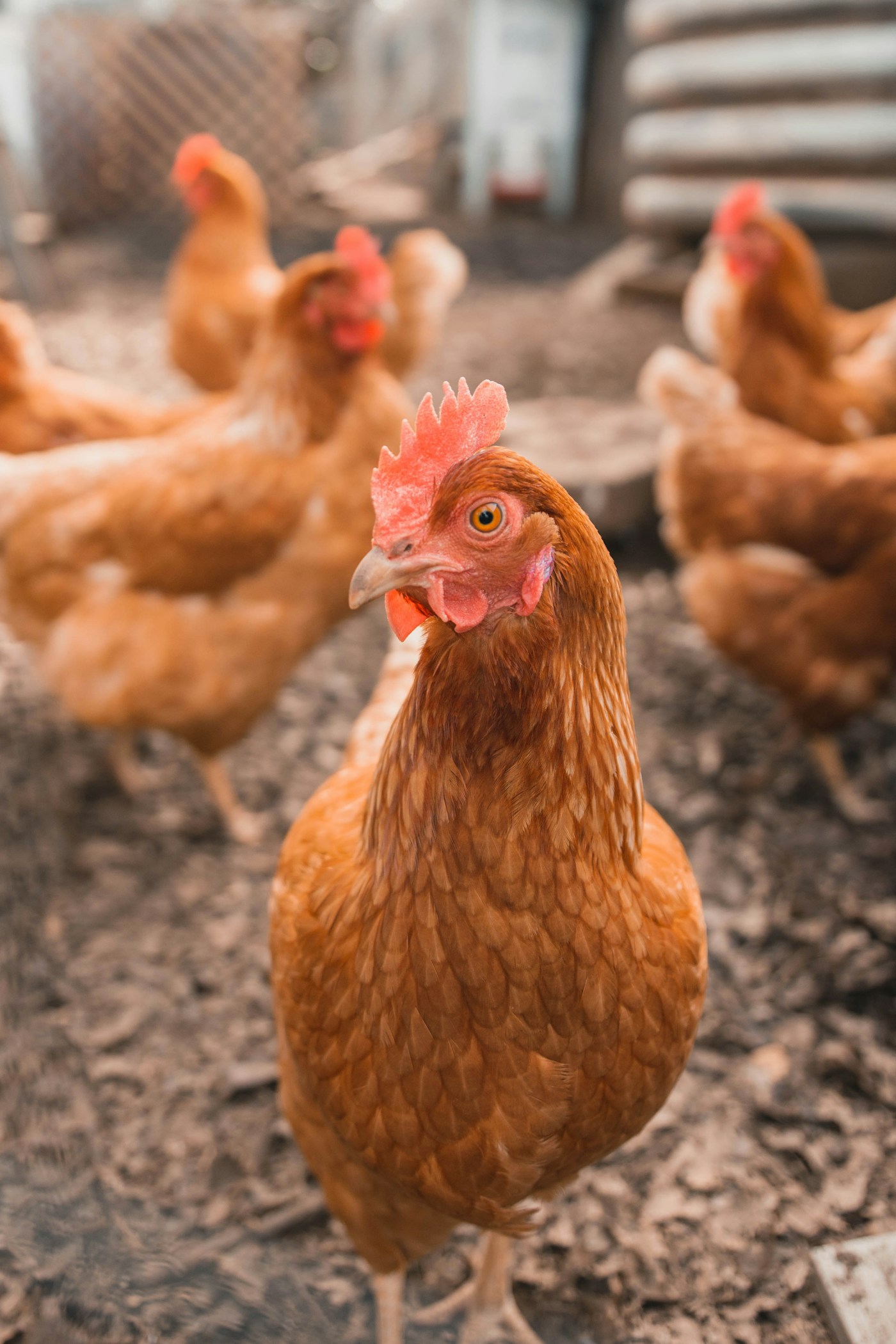
Isa Brown
The archetypal white egg layer — light-bodied, energetic, and producing more white eggs per kilogram of feed than any other breed.
About the Isa Brown
The Leghorn is to white eggs what the ISA Brown is to brown eggs — the commercial standard against which all other laying breeds are measured, and the breed whose genetics form the foundation of the global white egg industry. Originating in the port city of Livorno (anglicised to Leghorn) in northern Italy and imported to the United States and subsequently Australia in the nineteenth century, the Leghorn was refined through decades of commercial selection into the extreme production machine that characterises modern white-egg commercial operations. In Australia, where brown eggs dominate consumer preference, the Leghorn is less commercially prominent than the ISA Brown, but for the small farm keeper interested in white eggs, heritage breed diversity, or a genuinely self-reliant, foraging-capable laying breed, the Leghorn offers a compelling combination of production and practicality.
The Leghorn is a small, light bird — laying hens typically weigh only 1.8 to 2.2 kilograms, significantly less than the Australorp or Plymouth Rock. This light frame confers the breed's primary commercial advantage: extraordinarily efficient feed conversion to egg production. A Leghorn produces 280 to 320 white eggs per year while consuming significantly less feed per dozen eggs than heavier breeds. In an era of rising feed costs, this efficiency has real economic value in a production-focused flock.
The temperament of the Leghorn is the most significant management consideration for small farm keepers. They are alert, active, and genuinely flighty compared to the heavier, calmer breeds that dominate the Australian small farm market. A Leghorn startled by a sudden noise will take flight over a modest fence and generally be more difficult to handle than an equivalent Australorp or ISA Brown. This is not aggression or bad temperament — it is the expression of a highly active, alert bird that was never selected for the calm domesticity that characterises breeds selected for confinement management. For a ranging system with good fencing, the Leghorn's active foraging behaviour is an advantage; for a small urban backyard with neighbours, the breed's tendency toward flight and noise may be a constraint.
Heat tolerance is one of the Leghorn's genuine practical advantages in Australian conditions. The large comb and wattles that are characteristic of the Mediterranean breeds function as heat radiators — the blood flow through the comb dissipates heat efficiently in hot conditions, making the Leghorn significantly more heat-tolerant than heavy feathered breeds. In the hotter regions of Australia — inland Queensland, the NT, and the WA interior — the Leghorn's heat adaptation is a genuine production advantage, maintaining laying rates through Australian summer conditions that cause significant production drops in heavier, less heat-adapted breeds.
Characteristics
Production
Production of 280 to 320 white eggs per year from laying strains, with excellent feed conversion efficiency. The Leghorn produces more eggs per kilogram of feed than any other common breed. White eggs have no nutritional difference from brown eggs — the colour is purely a product of the breed's genetics. Production is sustained at a good rate for two to three years in quality laying strains.
Feeding & Care
Leghorns require adequate space for their active temperament — confinement without adequate ranging area leads to boredom, feather pecking, and general restlessness. Provide at minimum 1.5 square metres per bird in the run, and ideally genuine ranging access. Fencing must be adequate — a Leghorn motivated to escape will clear a 1.2 metre fence without much effort. Standard layer nutrition applies; the breed's small size means feed costs are genuinely lower than heavier breeds.
Pros & Cons
✅ Pros
- Highest egg production per kg of feed — most efficient white-egg layer
- Excellent heat tolerance — suited to hot Australian climates
- Active forager — genuine ranging capability reduces feed costs
- Beautiful bird — large impressive comb and carriage
- Self-reliant and resourceful
⚠️ Cons
- Flighty temperament — more challenging to handle than heavy breeds
- Prone to flight over lower fences
- Not suitable for tight urban spaces with noise-sensitive neighbours
- Not broody — no natural hatching capacity
- Not a meat breed — roosters are light and not table-worthy